
Choosing a sexual partner is not a random decision. We all have a set of characteristics that we seek or find attractive in a potential mate. Among the components that play a role in the development of these preferences, recent studies have demonstrated that your first sexual experiences play a role in who you may choose as a mate in the future. Thus, what we look for in a partner has more to do with that first time than you may think.
There are a great deal of past memories that we are not able to remember. However, for some reason, some memories stick with you. Most people claim to remember the first time they had sex in great detail, yet do not recall subsequent sexual experiences in the same manner. So, why do first sexual experiences burn in your memory, and how do they determine who you choose to sleep with later on in life?
Studying first sexual experiences: from the brain to our behavior
Almost every aspect of our behavior can be explained by our brain’s activity. In it, complex biochemical systems allow us to learn from our environment and experiences. Interestingly, the same mechanisms that create pleasurable sensations when we eat a delicious meal are the ones that help you learn that certain events predict certain consequences.
For instance, when presented with food, an animal salivates to help digestion. The same animal would also salivate to the sound of a bell if that sound was previously paired with the food. Similarly, we are able to establish associations between neutral stimuli and certain physiological responses. That is how you may experience sexual arousal if you see your partner dressed in a nice piece of lingerie or if they “talk dirty” to you.
So how do first experiences play a role in who we choose as a mate?
In order to study first sexual experiences, we partnered up with the champions of science: rats. Male rats can be trained to associate sexual reward resulting from intercourse with a neutral odor cue on the female, like a perfume. With enough training, male rats develop a preference for females bearing the same perfume.
To assess our hypothesis, we manipulated their first sexual experience, by giving them access to copulate with a normal female, to later on be trained to prefer females bearing a perfume. What we found is that rats did not show a preference for their current partner, unlike in the other control groups.
In other words, although rats tend to develop a partner preference for their current “dating” partner, being presented with their first partner was able to interfere with that learned preference: showing that their first sexual experiences can have a profound effect in mate preference.
Your first sexual fetish.
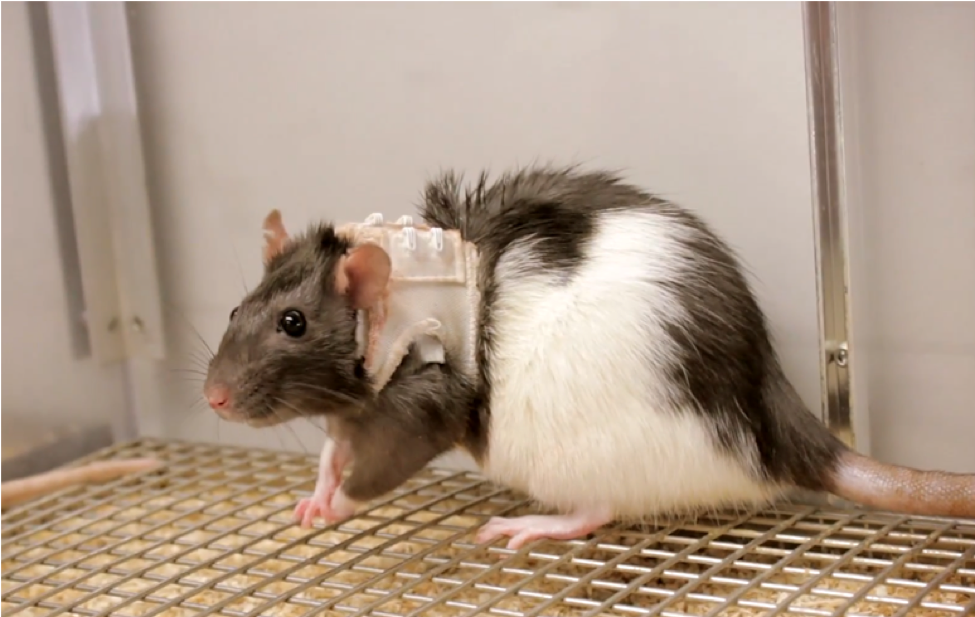
Given the findings of our experiment on the effect of first sexual experiences on current sexual partner preferences, we wondered if sexual fetishes could be explained by similar mechanisms. Therefore, we changed the perfume for a jacket (yes, rats dressed in lingerie!), and found very similar results not only for male rats but also for females. Our findings demonstrated that males, just like females, can learn from a variety source of cues, suggesting that sexual fetishes are at the base of the same learning mechanisms.
Are we prisoners of our past?
At this point, you may wonder how or even why is important to study these phenomena. These studies will help to deepen our understanding of how early experiences shape us. Our studies will not only allow us to gain greater insight into how our first sexual experience impacts sexual partner selection, but given that some first-sexual experiences might be traumatic, they may also help us to understand how to overcome the effects of first sexual experiences when needed.
Whether your “first” resembles your current or any other along the way, what these findings indicate is that first sexual experiences can be part of the puzzle. These findings do not capture all of the complexity of partner preference choice in humans, nor do they suggest that one is a prisoner of their past choices when it comes to choosing a sexual partner. However, they do seem to suggest that your past may help to explain a patter in your sexual partner “type” or your mates. Thus, we may finally understand why, after that first experience, we may never be the same.